The Big Industry Shift: From perfection to personality in food photography
Written by Kaylee Brown, Producer and Manager at Freshmade Studios: June 2026. Freshmade Studio is an award-winning food photography studio specializing in CPG food and beverage brands. Based in South Florida, we create stills, motion, and content ecosystems for modern food brands. See our work →
Something has fundamentally changed in how food imagery lands with audiences — and the brands catching on are pulling ahead.
For years, the goal of food photography was perfection. Flawless plating. Surgical lighting. Not a smudge, not a crumb, not a visible human anywhere in the frame. The language of aspirational food imagery was total control: control over color, texture, environment, and the invisible suggestion that this product existed in a world untouched by actual people.
That era hasn’t disappeared. But it’s no longer the dominant language of food marketing — and for modern CPG brands, it’s no longer the most effective one.
The Shift from Aspiration to Relatability
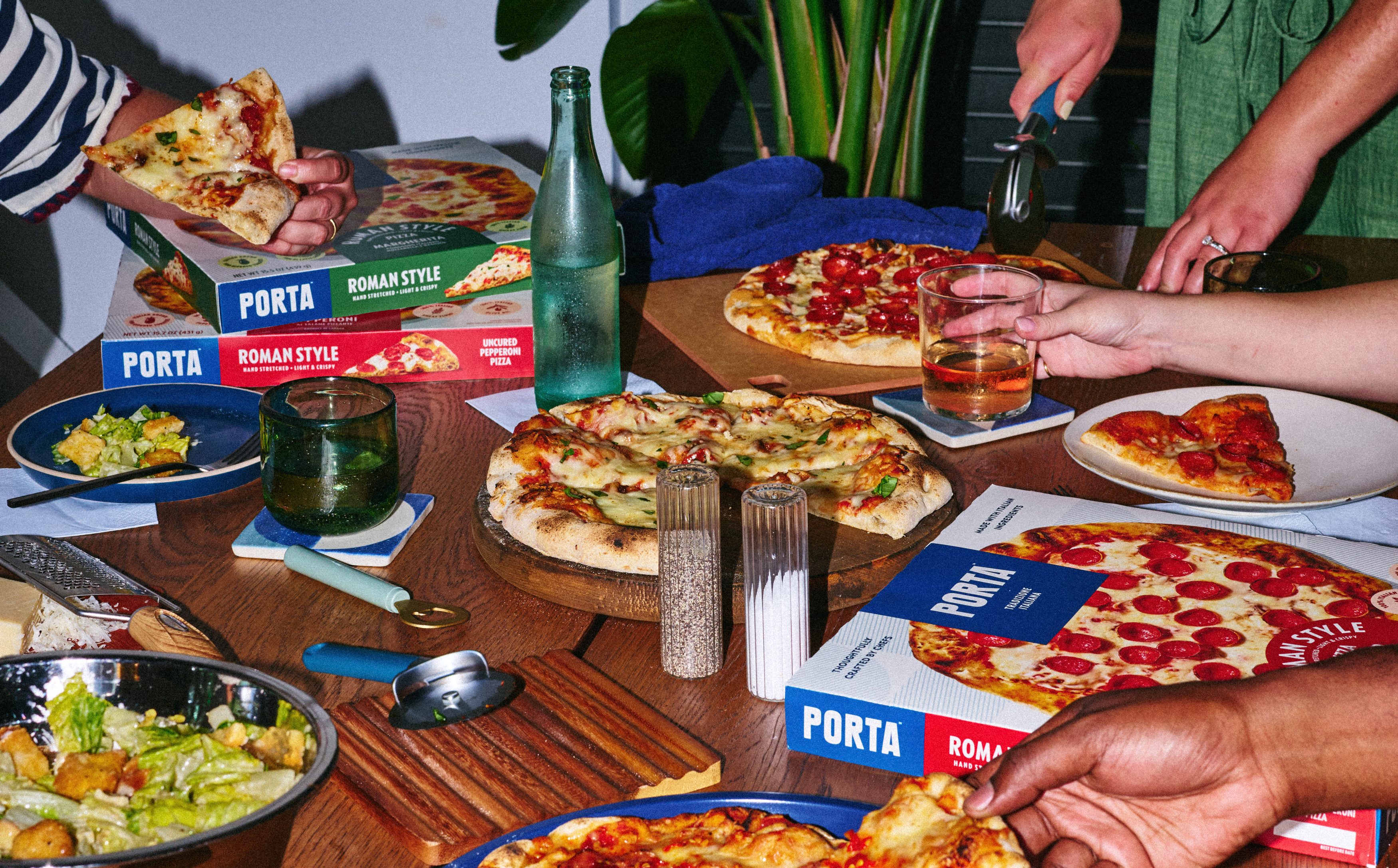
The most engaging food imagery right now looks like life. Dinner parties where hands are reaching in from every angle. Tables with half-empty glasses and a pizza box still in the frame. Shared meals with crumbs, motion blur, and imperfect plating that somehow looks more delicious than anything that’s been styled to within an inch of its life.
This isn’t an accident. Audiences — especially younger consumers and better-for-you brand customers — have become fluent in the visual language of authenticity. They’ve grown up on Instagram and TikTok, where the realest content is the most trusted content. They know when something’s been over-styled. They feel the distance.
Real imagery collapses that distance.
When food looks like it exists in someone’s actual kitchen, at someone’s actual table, with actual people eating it — it triggers a different emotional response. It’s not “I want that.” It’s “that could be mine.” That shift, from aspiration to belonging, is what drives purchase intent for modern brands.
What This Looks Like in Practice
The most effective food photography today isn’t about hiding reality — it’s about curating it. There’s still craft involved: lighting, composition, styling, timing. Do you know how hard it can be to make something look both messy and delicious? Do not try this at home, kids. It’s just simply that the creative brief has changed.
We’re seeing brands request:
Lifestyle and social scenes. Real table settings. Multiple dishes. People present in the frame — hands, arms, faces. The visual language of hospitality and sharing, not a lone hero product on a white background.
Process and ingredient moments. The pour. The cut. The sprinkle. The moment before the dish is finished. These images communicate craftsmanship and real ingredients in a way that a static hero shot simply can’t.
Imperfection as a design choice. A drip of sauce. A cracked edge. A slightly uneven slice. These details signal handmade, real, and trustworthy — which is exactly what consumers are looking for in food products right now.
Behind-the-scenes content. This is one of the biggest requests we’re fielding right now. Clients want BTS footage alongside their final assets, because the behind-the-scenes story — the real shoot environment, the team, the creative problem-solving — is often more compelling on social than the polished end product.
Why This Matters Even More in the Age of AI
Here’s the counterintuitive truth about AI imagery: as AI-generated food photography becomes more common, real photography becomes more valuable — not less.
AI can produce a technically competent image. It can approximate lighting, plating, and color. What it cannot do is collaborate with your brand team, respond to an unexpected ingredient delivery, riff on a creative idea that emerges mid-shoot, or apply the cultural taste and intuition that makes an image feel right for a specific audience.
AI also can’t produce the physical reality of food: the way steam rises, the way sauce settles, the way a hand naturally holds a product. These details are small. They’re also the details that tell a viewer’s brain — before conscious thought kicks in — whether something is real or not.
For brands whose entire promise is real ingredients, real processes, and real care? AI imagery is a liability, not an asset. Your competition might use it. That’s actually good news for you.
Real food feels more trustworthy. Real people feel more relatable. Real production communicates value in a way that generated imagery simply cannot replicate.
The Shoot as an Ecosystem
Modern food photography isn’t just about hero shots anymore. A well-executed shoot now produces a full content ecosystem: stills for retail, lifestyle images for social, motion content for digital ads, and behind-the-scenes footage that lives on Instagram and builds brand affinity day after day.
This is how Freshmade Studio approaches every project. We’re not just capturing a single image — we’re building a cohesive visual story that works across every channel, at every stage of the customer journey. From the moment someone discovers your brand to the moment they’re looking for your next product, the imagery tells the same story.
That story can be perfectly composed without being perfectly sterile. In fact, the most successful brand stories we’ve helped tell have been the ones that felt the most like someone’s real life.
What This Means for Your Brand
If you’re a food brand reassessing your visual identity, the most important question isn’t “are our images perfect?” It’s “do our images feel true to who we are?”
If the answer is no — if your imagery still looks like it belongs in a different decade, or if it feels disconnected from the experience your product actually creates — this is the moment to recalibrate.
The shift from perfection to personality isn’t a trend. It’s a permanent realignment of what consumers trust, what they share, and what they buy.
We’d love to help you tell a more authentic story.